
In Canada, there are 597,000 people with a neurocognitive disorder. By 2030, this number will approach one million. On the occasion of Alzheimer Awareness Month in Canada, and IEEE WCCI 2022 (World Congress on Computational Intelligence), the Centre de Recherche Informatique de Montréal (CRIM) invites you to learn more about the benefits of artificial intelligence for early diagnosis and treatment of the disease.
“More than 50 million people worldwide are living with various neurodegenerative diseases, including Alzheimer’s. Early detection of dementia could help people diagnosed with the disease to access various intervention programs, including clinical ones, to preserve a normal quality of life and slow the progression of the disease. Early detection of dementia could help people diagnosed with the disease to access various intervention programs, including clinical ones, to preserve a normal quality of life and slow the progression of the disease. The global scale of the effects of these diseases requires the collaboration of neurologists, psychiatrists and artificial intelligence developers around the world to develop AI solutions capable of measuring, diagnosing and treating neurodegenerative diseases.”says CRIM, which is presenting a series of virtual conferences in English on the subject, with two experts.
Speakers on detecting early signs of the disease
1. Sensor-based data processing
 Throughout his lecture on detecting early signs, Dr. Yiannis Kompatsiaris began by outlining the main problems in caring for patients with dementia disorders: “inaccessibility and unaffordability. We essentially rely on lifestyle recommendations, rather than specific, pharmaceutical treatments.” He also mentioned the shortage of nursing staff, the lack of information and the lack of affordable innovative solutions.
Clinically speaking, the real problem lies in the fact that the disease goes undetected by examinations when patients are in the so-called “subjective” stage of cognitive decline. They obtain normal test results, yet are more likely to develop a severe form of dementia. So how can we detect the signs that usually fly under the radar?
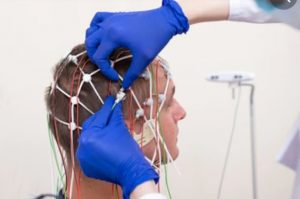
Dr. Kompatsiari suggests “introducing personalized upstream interventions” to delay cognitive decline, through two technological approaches.
The first approach involves monitoring the patient’s daily activities. Devices concealed in the environment, such as cameras or environmental sensors, and body sensors as discreet as possible, worn by the patient as a garment or accessory, collect data on movement, sounds, behavior, sleep cycles, performance of household and kitchen chores, physical activity, etc.).
The second method relies on the electroencephalogram (EEG) to measure and record the brain’s electrical activity and response. EEG involves attaching sensors to the patient’s head, which are connected by wires to a computer.
2. Language markers

Dr. Björn Schuller’s video conference focused on the potential of AI to analyze and detect early signs of the disease based on language and behavioral markers. “There are many markers to consider in relation to language, such as decreased fluency and slowed speech rate in the early stages of the disease. In the moderate stage, there are difficulties in following a conversation and expressing oneself. In the advanced stage, there’s incoherence, rambling, and zany behavior such as spontaneous singing and stammering.”
By collecting data on how a sample of people with no cognitive loss express themselves and interact orally, we feed artificial intelligence so that it can recognize the language state associated with a healthy cognitive state.
By analyzing the language of patients suffering from cognitive disorders, artificial intelligence can then recognize inconsistencies and markers linked to decline. Thanks to advanced analysis, AI will even be able to recognize them at their earliest stage, in other patients, thus detecting their illness at an early stage.
NUMERIA
Do you work in the healthcare sector, or in a healthcare facility, and would like to contribute to technological innovation for the benefit of your community?
To help Quebec SMEs and organizations carry out their first AI project, and implement a proprietary data strategy, CRIM is offering a support program called NUMERIA. We invite you to discover our special report on the initiative, at cscience.ca/numeria.
*Article written by Chloé-Anne Touma and published on CScience on January 13, 2023.