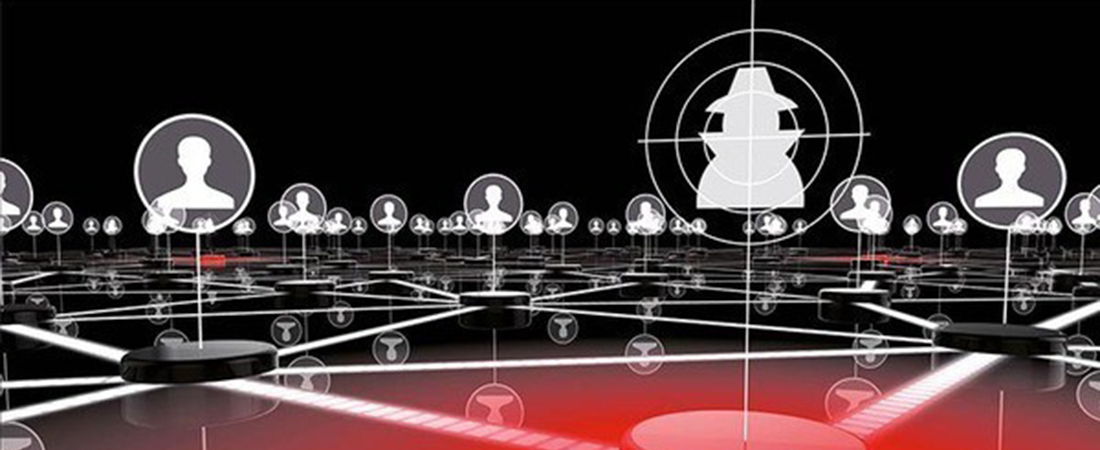
Social media: a book that tackles the issues of privacy, security and misinformation head-on
Montréal, February 9, 2021 – How can we ensure that the social media we use or contribute to respect and protect the privacy of individuals? What policy should be applied to authenticate profiles? To what extent can information published on a personal account be trusted? These are just some of the fundamental questions addressed by the book Social Media: Perspectives on the Challenges of Cybersecurity, Algorithmic Governmentality and Artificial Intelligencepublished by Presses de l’Université Laval.
 Offered as part of the “Ethics, AI and Society – OBVIA” collection, this book, edited by Schallum Pierre, scientific and ethics officer at Université Laval’s Institut intelligence et données (IID), and Fehmi Jaafar, cybersecurity researcher at the Centre de recherche informatique de Montréal (CRIM), brings together texts by 16 contributors, associated with six Canadian and Austrian universities, as well as actors associated with companies specializing in information security.
The book follows in the wake of numerous debates, here and elsewhere, related to social media and the moderation of their content, to tackle several key issues head-on. “Guidelines on the management of personal data are oriented towards the private interests of social media. Today, it is important to put in place not only regulations linked to the context of the entities involved (users, states and platforms) but also, and above all, prevention policies based on respect for the human person”, argues Schallum Pierre.
“Social media are an inexhaustible source of information on citizens and their links with private and public bodies. Securing this personal information is a form of citizen security and data “sovereignty”, with a view to preventing the control of mass opinions and the proliferation of electronic fraud, manipulation and hate speech”, adds Fehmi Jaafar.
The book, which is available free of charge, is intended first and foremost as a guide to raise awareness among citizens and experts alike of the issues surrounding the protection of personal data and the development of privacy policies.
Access the book on the Presses de l’Université Laval website
A virtual conference to accompany the launch
The public is invited to take part in a free webinar on Wednesday, February 24, from 12:00 to 1:30 pm. On this occasion, various contributors will take part in a round-table discussion to put forward various perspectives set out in the book, as well as answer questions from participants. Registration : Register for the event
A collection of works and reflections on AI and society
The book edited by Schallum Pierre and Fehmi Jaafar is the first title published in the “Éthique, IA et Sociétés – OBVIA” collection from Presses de l’Université Laval.
This collection, aimed at both academics and engaged citizens, aims to advance knowledge by clarifying recent advances in AI and digital technology while highlighting their societal impacts. “Our collection aims to bring together original works that address technological developments by raising their impacts, whether beneficial or negative on society,” explains Lyse Langlois, Director of the International Observatory on the Societal Impacts of AI and Digital (OBVIA).
Promoting interdisciplinarity and going beyond the usual disciplinary frameworks, the “Ethics, AI and Societies” collection thus aims to make empirical and theoretical research accessible to a wide readership, and to help better understand the societal impacts that these technological developments raise.
About Laval University’s Institute for Intelligence and Data (IID)
Inaugurated in January 2020, Université Laval’s Institut intelligence et données (IID) brings together the driving forces behind research and innovation in artificial intelligence and data enhancement in the greater Quebec City region. From applied and fundamental research to major ethical issues, its member researchers, collaborators and associates are actively working to develop today the methods, technologies and uses that will support tomorrow’s Quebec. For more information, visit iid.ulaval.ca
About OBVIA
OBVIA brings together over 220 Quebec researchers and more than 125 partners worldwide. Initially piloted by Université Laval and supported by the Fonds de recherche du Québec, its mission is to raise crucial issues and identify plausible solutions to the problems and opportunities posed by AI and digital developments in Quebec and elsewhere in the world. This work provides food for thought for citizens and public authorities on the societal impacts of technologies and digital technology on health, but also on the economy, politics and culture of current and future generations. For further information: observatoire-ia.ulaval.ca
About CRIM
CRIM is an applied research and expertise centre in information technology, dedicated to making organizations more effective and competitive through the development of innovative technology and the transfer of leading edge know-how, while contributing to scientific advancement. It enables organizations, mainly SMEs, to demystify and gain access to cutting-edge technologies such as artificial intelligence, in order to effectively resolve the technological issues they face. CRIM is a not-for-profit organization. Its neutrality and the strength of its network make it an essential resource. Its action is in line with the policies and strategies steered by the Ministère de l’Économie et de l’Innovation, its main financial partner. For further information, please contact www.crim.ca
The people responsible for the book are available for interviews.
Source: CRIM, IID and OBVIA
For information or interviews :
Diane Fortin, Communications Manager, CRIM
514 210-0545 or Diane.Fortin@crim.ca
Raymond Poirier, Communications Advisor, IID, ULaval
418 558-9560 or Raymond.Poirier@iid.ulaval.ca